Judith S. Beck, PhD, President
On July 18, we mark Aaron T. Beck Day, the 105th birthday of my father, our co-founder—a psychiatrist who changed the way we understand the human mind. What many people don’t know is how my dad’s open-mindedness, curiosity, keen intellect, and passion for scientific rigor combined with an accident of history to lead to the development of cognitive therapy against all odds.
A Scientist in the Wrong Field
I’ll start the story of this amazing achievement back in the 1940s, when my dad was a medical student at Yale University. He was very much drawn to the specialties in medicine that emphasized observation, data collection and analysis, and hypothesis testing. Psychiatry, in the 1940s, lacked the rigor of scientific study. Psychopharmacology didn’t become widespread for another decade. Long-term institutional care was the norm for individuals diagnosed with serious mental health conditions and psychiatrists sometimes used somatic treatments, such as insulin coma therapy, electroconvulsive therapy, or lobotomies. Psychoanalysis was by far the dominant psychotherapeutic modality.
My dad was quite dismayed by an assignment he had been given in medical school. He was required to write up a psychoanalytic case study of a patient. It felt to him as if he were just speculating, instead of basing his interpretations on actual evidence. Fortunately, a good friend helped him with the assignment. Psychiatry seemed like a “soft” field that was insufficiently empirical. After medical school, he studied “hard” sciences, first doing a rotating internship in internal medicine, followed by starting a residency in pathology. He then switched to a residency in neurology. So why did he start to study psychiatry? Well, it wasn’t his choice. The chairman of his department told him and his fellow residents that due to a shortage of psychiatric residents, they were required to do a 6-month rotation in psychiatry. What a lucky accident of history!
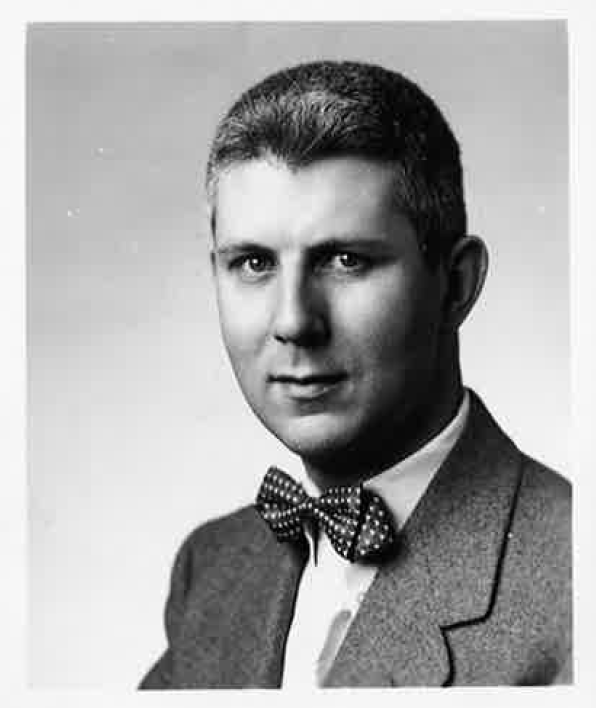
As a resident and later a fellow in psychiatry, my dad became interested in psychiatric patients. He remained committed to the scientific approach, though, and was not enamored with psychoanalysis. His mentors, instructors, and peers told him that his skepticism of psychoanalysis was just a form of “resistance.”
The Dominant World He Entered
Psychoanalysis was at its peak in the US from 1945-1970. It dominated mental health care. Most departments of psychiatry were psychoanalytically based, and psychoanalysis influenced social work, psychology, and popular culture. It differed in several ways from the form of modern-day psychodynamic psychotherapy that would develop later. Its major goal was to make the unconscious conscious, replacing unconscious, automatic reactions with conscious understanding. Its major interventions included having patients lie on a couch and free-associate, saying whatever came to mind, while analysts sat behind the patient, serving as a “blank slate” for clients to re-enact maladaptive relationship dynamics. Patients were encouraged to focus on early developmental experiences which, analysts hypothesized, led to unconscious conflicts and psychiatric symptoms. Therapists analyzed their dreams to identify underlying unconscious meanings and made interpretations of their wishes, fears, defenses, and conflicts. Analysis often took years to complete, with three to five sessions per week. Psychoanalysis was expensive, not scalable, and inaccessible to most people.
Nevertheless, my dad was ultimately persuaded to undertake a serious study of this treatment. He became a traditional psychoanalyst in the early to mid-1950s and underwent personal analysis twice. He fulfilled all the necessary requirements and graduated from the Philadelphia Psychoanalytic Institute in 1958. He was thoroughly convinced that psychoanalysis was the best way to treat patients. Being a scientist at heart, he recognized that psychoanalysis would only gain acceptance in the scientific world if research validated its fundamental concepts. So, he embarked on a series of studies that he predicted would provide the necessary empirical support for psychoanalytic constructs of depression. Much to his surprise, his research invalidated the theories that depression resulted from anger turned inward toward the self and that depressed clients had a need to suffer. Then my dad did something remarkable. Instead of mistrusting his results, he hypothesized that the psychoanalytic conceptions were inaccurate. He also reviewed the basis for the unconscious and did not find evidence that unacceptable impulses and fantasies were repressed. And when he studied infantile memories and the transference of parental images onto the therapist, he found only weak evidence and other more likely interpretations of the data.
The Question that Changed Everything
My dad asked himself the question: “If psychoanalytic constructs of depression are invalid, how else can we understand depression?” He began to search the literature. He noted that others had described spontaneous thoughts outside of deliberate awareness and he began to recognize that his clients, who were still free-associating on the couch, sometimes had a second stream of thoughts that they rarely reported. He found that this internal communication system seemed linked to their emotions and behavior. He was the first to recognize that these “automatic thoughts,” which could be easily elicited from most depressed patients, were often inaccurate or unhelpful or both. He began to have clients sit up at a table with him, fostering a collaborative relationship. He taught them the scientific method of examining their thoughts and responding effectively to them.
Eventually, having been greatly influenced by behavior therapy, he developed a systematic, operationalized treatment and with his chief resident, A. John Rush, Marika Kovaks, and Steve Hollon, conducted the first randomized study in which the efficacy of a psychotherapy (by then, called “cognitive therapy”) was compared with psychopharmacology (Imipramine, an anti-depressant). Cognitive therapy was demonstrated to be even a little more effective than the medication and a follow-up study found cognitive therapy was twice as effective in preventing relapse. And the rest is history.
Today, my dad’s legacy is the millions of people worldwide who have benefitted from cognitive therapy. On Aaron T. Beck Day, we celebrate his understanding of what mental health care should be: collaborative, compassionate, and evidence-based. I hope you’ll join me as we continue to move the field forward.
Learn More About Aaron T. Beck Day!
Help us keep Dr. Beck’s legacy alive by sharing these free resources:
- Beck Institute’s Facebook, LinkedIn and X, and our brand-new Instagram account, where we share exclusive video content.
- Our monthly newsletter for professionals and for the general public—get CBT news, tips, and resources delivered straight to your inbox.
- Beck Institute’s newly overhauled Certified Clinician Directory featuring providers all over the world.
- Our CBT resources for professionals, including assessment tools, worksheets, client pamphlets, and international resources in a wide range of languages.