A conversation with Paul Grant, PhD, Director of the Beck Institute Center for Recovery-Oriented Cognitive Therapy (CT-R)
You recently returned from an annual invite-only gathering affectionately known as “BeckFest.” What is this gathering, and how did it get that name?
Paul Grant, PhD: This was the 27th meeting. The very first one was actually held at the Beck Institute itself. Dr. [Aaron] Beck wanted it called “The International CBT for Psychosis Conference”—very formal—but the group organizing it thought it felt more like a gathering of people who genuinely wanted to be there; a festival of sorts. Emmanuelle Peters, a longstanding conference attendee and organizer, is credited with coining the term “BeckFest.” The name stuck, and honestly, it captures the spirit of it better than the formal title ever did, something Dr. Beck himself, came to realize and enjoy.
How has the conference evolved since then, and where is it headed?
PG: It started modestly—mostly researchers from England, Ireland, and Scotland. Over time, the North Americans began coming, then those from continental Europe, then Australia and Asia. This year’s meeting occurred in Montreal, Quebec; next year the group voted to hold it in Lisbon. Presentations from Japan, Africa, Mexico, and a real French-speaking presence highlighted Beckfest26.
What’s evolved even more meaningfully, I’d say, is the inclusion of people with lived experience. Their inclusion happened occasionally over the years, but now it’s fundamental. People who have experienced psychosis, who hear voices, who’ve lived with the fear of being persecuted—they’re not just attendees, they are asking the important questions, co-designing the research and developing the treatments being presented. Dr. Beck, himself, would be impressed and proud!
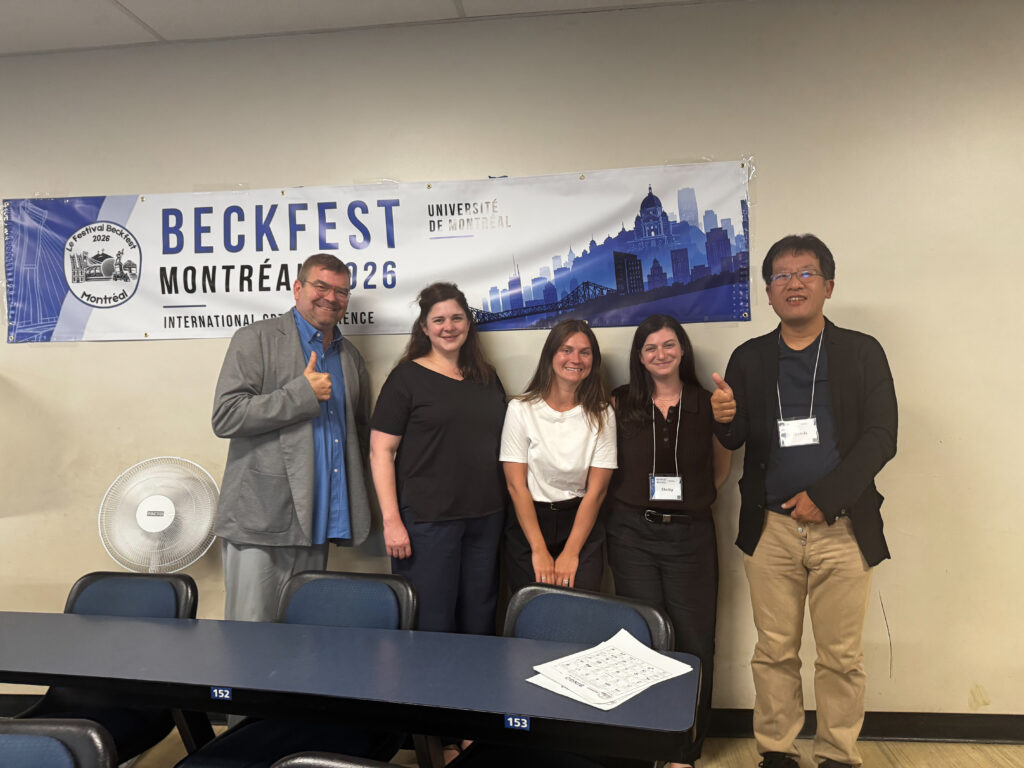
You lead a specific part of the conference called “Tim’s Corner.” Tell us about that.
PG: My team and I were trained, supported, and believed in by Dr. Beck, often before we’d done anything to earn it. That kind of generosity leaves a mark. Our experience is not unique. Most of the “Old Guard” of the BeckFest conference have experienced something similar, early career support from Tim (Dr. Beck would say, when collaborating, “Call me Tim!”). “Tim’s Corner” is our way of keeping that spirit and support going for the next generation. It’s a section of the conference I curate specifically for early-career researchers and clinicians, people just starting to find their footing in this work.
I try to encourage presentations that focus beyond the problems and pathology, that address where the field is actually headed—the people with lived experience, the innovative and sometimes unconventional ideas, the questions the more established researchers might not be asking yet. That’s where the energy is and, as Dr. Beck taught us, that’s the sweet spot for mentorship.
Dr. Beck’s influence clearly runs deep in this community. How visible was that at this year’s conference?
PG: Very. There were nine people at this year’s conference who had worked directly in Philadelphia with Dr. Beck—more than five percent, but less than ten percent, of everyone present. That’s a significant showing for someone who’s been gone for a few years now. I should say that a much higher percentage collaborated with him on projects, papers, and books.
In addition to our fabulous BI team who worked directly with Dr. Beck, there is Dan Shapiro, who is running first-episode psychosis services and a major trial out at UC Davis. Also, Lauren Luther, now a professor at the University of Alabama, is doing fascinating work on negative symptoms and defeatist beliefs in people at clinical high risk for psychosis, essentially building mobile interventions to help people have more of a life day-to-day, not just fewer symptoms.
And Dimitri Perivoliotis, a professor at UC San Diego, is deeply embedded in CT-R and is exploring some genuinely novel territory: the intersection of CT-R, negative symptoms, and how hallucinogenic medications might accelerate learning in therapy. People sometimes think that sounds unconventional, but that’s very on-brand for the kind of people Dr. Beck attracted throughout his career. He was always drawn to the most interesting, sometimes unorthodox thinkers in the room.
What does it mean to you, personally, to help carry that legacy forward, both through your own work and through mentoring early career clinicians?
PG: What I have and what my team has is something a lot of people in this field don’t: direct personal experience with Dr. Beck. That’s not something you can read about in a paper. It shapes how you think, how you treat people, and how you mentor the next person coming up behind you.
So in a real sense, we carry him with us. Every time one of us mentors an early-career researcher the way we were mentored, every time CT-R helps someone focus on a person’s life instead of just their symptoms, that’s Dr. Beck’s approach continuing to do its work in the world. That continuity, especially now, feels like one of the most important things our team can offer.
This conversation has been edited for length and clarity.
Related Program: Recovery-Oriented Cognitive Therapy
Read more about CT-R:
- Creating Groups that Are Stronger Together: How Recovery-Oriented Cognitive Therapy Strategies Can Help You Transform Group Treatment
- An Empowering Approach to De-Escalation for Mental Health Crises: Recovery-Oriented Cognitive Therapy
- Recovery-Oriented Cognitive Therapy in Practice: An Interview with Robert Dromboski, MEd, Psychologist