A conversation with Paul Grant, PhD, Director of the Beck Institute Center for Recovery-Oriented Cognitive Therapy (CT-R)
You’ve spent decades working with people experiencing serious mental health conditions. What’s the core difference between how CT-R approaches this work and how the field has traditionally approached it?
Paul Grant, PhD: Most researchers and clinicians in this space, even when they’d tell you otherwise, are ultimately focused on reducing problems. This is pretty standard medicine. Someone has a disorder, that disorder has symptoms that cause problems in the person’s life, and the goal becomes shrinking those symptoms to get the person back to living their life. When you get a strong effect size or a good p-value for symptom reduction, that’s the win.
But then you look further and ask “Okay, so what about their life? Their relationships, their sense of purpose, their day-to-day experience?” A limitation of a lot of the big trials that focus on symptom reduction is that you don’t see the same striking results on these life domains that you see with symptom reduction. When I’ve spoken to colleagues about it, the response is usually that it’s not a primary outcome measure or the measures they use to capture this aren’t very good.
This is where I think we can create some of the biggest culture change and what I think CT-R can really address. The symptoms in question in these studies vary greatly, but unilaterally when talking to folks with lived experience, they agree on wanting their lives back. This gap between what gets studied and what people actually want most is the whole reason CT-R exists.
You mentioned a moment of realization that reframed how you think about CT-R. What was that?
PG: I was at a conference listening to those with lived experience try to nudge the researchers to include more of what they want in the treatments being designed and tested for psychosis. We kept circling around different models for helping people manage anxiety and distress. I thought of my own work with [Dr. Aaron] Beck and our team on negative symptoms—the low motivation, low energy. We knew from the beginning that it wasn’t enough to get people energy. What matters is what they do with it. It’s the life. It’s how someone lives, not just what a symptom scale says. This is why the primary outcome in CT-R has always been the person’s life; their symptoms are secondary outcomes.
Though it is not a perfect analogy, I thought of Housing First—the model in homelessness services where you don’t make someone “earn” housing by first addressing substance use or other issues. You house them first, and you address everything else from a place of stability. The logic is powerful: when people have to earn stability, some of them just don’t survive long enough to get there. A person’s life is just as important of a need as housing or food!
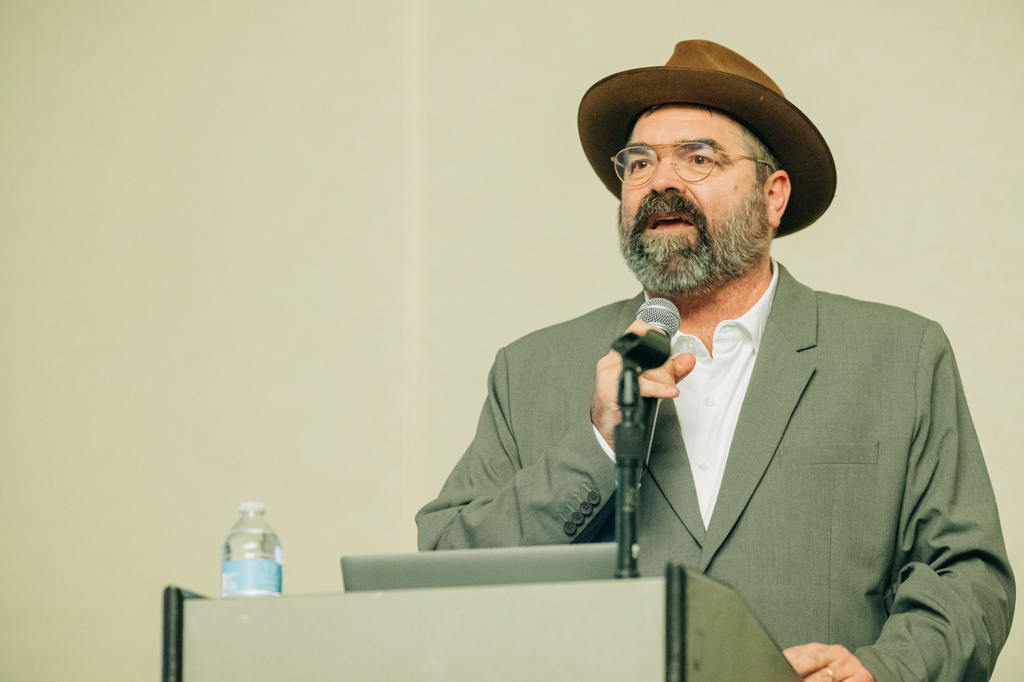
I realized in that moment—Dr. Beck would call it a brainstorm—that not everyone needs or wants housing, but again, everyone wants their life. Dr. Beck put it like this: “There’s nobody in the world that doesn’t have aspirations, that doesn’t like to think of making their life better.” We have always been putting people’s lives first without calling it that. That’s where the saying “Life First“ came from for me. You say to someone, “We’re going to try something new with you. It’s called CT-R, and it puts your life first.” You still have to help them work through real challenges, but those challenges become something you work on in service of their life, not the starting gate they have to clear before their life counts.
Has “Life First” landed with other people in the field?
PG: I’ve only shared it in a few places so far. For example, I recently shared it with the head of the Global Leadership Exchange, Steve Appleton. He said he talks a lot about putting the person first but quickly saw how “life first” sharpens what we are talking about. It flips the frame: instead of a system deciding what needs to be fixed before someone’s life can move forward, you start from the life they want and work backward into the collaborative work that makes that possible.
Interestingly, I heard an echo of this from someone else recently—a well-known researcher in the field, someone with a more skeptical read on a lot of this work, who said something like: “Maybe we should focus more on what we can actually affect for people.” His point was that we might not be able to change certain underlying symptoms, but we can absolutely affect how someone’s life goes. He wouldn’t put it in these words, but that’s Life First too.
How does Life First connect to the Beck Institute’s broader mission?
PG: It’s exactly the mission. The Beck Institute’s mission isn’t ”reduce suicide” or “lower depression scores.” Even though it does this. Its mission is to improve lives. The assumption in a lot of the field is that if you move the clinical numbers, the life improvement follows automatically. What I’m arguing, and what the evidence—as well as clinical and lived experience—keeps showing, is that it doesn’t reliably work that way, especially for those given serious mental health condition diagnoses such as schizophrenia. You can bring distress down and still not see life go up.
So CT-R is really a shift in where you start. Not reduce the symptoms, and hope the life follows. But focus on the life, directly, from day one—and that meaningful, values-driven engagement with one’s own life and other people is itself the sweet spot in care that helps someone achieve wellness and a desired quality of life.
This conversation has been edited for length and clarity.
Related Program: Recovery-Oriented Cognitive Therapy
Read more about CT-R:
- Creating Groups that Are Stronger Together: How Recovery-Oriented Cognitive Therapy Strategies Can Help You Transform Group Treatment
- An Empowering Approach to De-Escalation for Mental Health Crises: Recovery-Oriented Cognitive Therapy
- Recovery-Oriented Cognitive Therapy in Practice: An Interview with Robert Dromboski, MEd, Psychologist